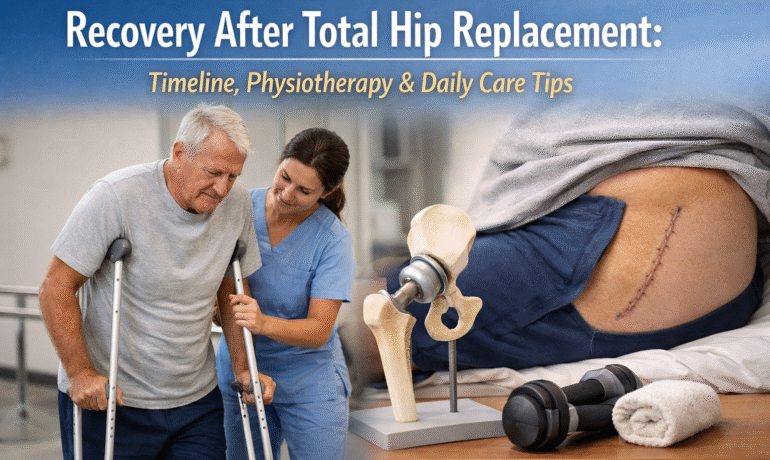
Total hip replacement surgery is a life-changing procedure that relieves chronic pain and restores mobility. However, a well-planned recovery is essential to achieve the best long-term results. Understanding the recovery timeline, rehabilitation process, and daily care tips helps patients return to an active, pain-free life safely.
Understanding the Recovery Timeline
Recovery after total hip replacement recovery happens in phases and varies based on age, fitness, and overall health.
First 1–2 Weeks:
Patients usually start walking with support within 24–48 hours. Pain and swelling reduce gradually with medication and rest. Basic movements and sitting are encouraged.
Weeks 3–6:
Mobility improves, walking aids are reduced, and patients regain confidence in daily activities. Most patients can resume light household tasks.
After 6–12 Weeks:
Strength and flexibility improve significantly. Many patients return to work and normal routines, depending on job demands. Full recovery may take up to six months.
Role of Physiotherapy in Hip Replacement Recovery
Structured hip replacement physiotherapy is vital for regaining strength, balance, and joint movement. Exercises focus on improving flexibility, preventing stiffness, and rebuilding muscle strength.
Key benefits include:
Faster healing and improved joint mobility
Reduced risk of complications
Better posture and walking pattern
Consistent therapy under professional guidance ensures safe progress.
Daily Care Tips for Faster Healing
Following proper post hip surgery care at home plays a major role in recovery success.
Avoid bending the hip beyond recommended limits
Use supportive chairs and raised toilet seats
Keep the surgical area clean and dry
Follow prescribed medications and wound care
Maintain a balanced diet to support healing
Simple lifestyle adjustments help protect the new joint and prevent injury.
Activities to Avoid During Recovery
To ensure smooth hip replacement rehabilitation, patients should avoid:
Crossing legs while sitting
Sudden twisting movements
Heavy lifting or high-impact exercises
Sitting on low surfaces
Following safety guidelines reduces the risk of dislocation.
When to Consult Your Orthopedic Surgeon
Regular follow-ups are essential to monitor progress and address concerns such as pain, swelling, or difficulty walking. For expert guidance, consult our Dr. Vinaykumar H for personalized recovery planning and advanced orthopedic care.
Conclusion
Recovery after hip replacement is a gradual process that requires patience, commitment, and medical guidance. Following the right timeline and therapy ensures better mobility and comfort.
With proper care, exercises, and lifestyle changes, patients can enjoy long-term joint health and improved quality of life.
Early attention to warning signs and expert consultation ensures a smooth and confident recovery journey.