
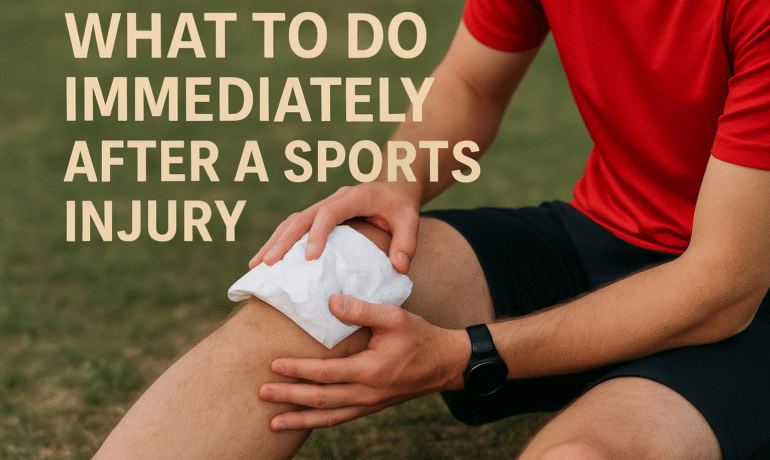
Sports injuries happen suddenly, often during intense activity or unexpected impact. Acting quickly can prevent further damage and support faster healing. Knowing the first steps of sports injury treatment, whether you’re an athlete or occasional exerciser, makes a huge difference in recovery.
1. Stop Activity and Protect the Injured Area
The first and most important step is to stop the activity immediately. Pushing through pain can worsen the condition. Protect the injured part by avoiding pressure, movement, or weight-bearing. Early attention helps limit swelling and reduces the risk of complications.
2. Use the R.I.C.E. Method
The R.I.C.E. method is one of the most effective ways to manage fresh injuries and prevent inflammation progression.
• Rest – Prevent further strain and allow your body to begin healing.
• Ice – Apply cold packs for 15–20 minutes every few hours to reduce swelling.
• Compression – Use an elastic bandage to control swelling and offer support.
• Elevation – Keep the injured limb elevated above heart level to minimize fluid buildup.
This simple approach is often the foundation of early acute injury care.
3. Manage Pain Safely
Over-the-counter pain relievers may help reduce discomfort. Stick to recommended dosages and avoid applying heat during the initial stage, as heat may increase swelling.
4. Avoid Harmful Movements
To prevent increasing damage, avoid the following until evaluated by a professional:
• Twisting or bending the injured area
• Intense stretching
• Heavy weight-bearing
• Sudden impact activities
Proper injury prevention tips can support safer movement and limit setbacks.
5. When to Seek Medical Help
You should visit a doctor if you experience:
• Severe pain or swelling
• Inability to move the joint
• Visible deformity
• Numbness or tingling
• Symptoms that worsen after 48 hours
Prompt evaluation helps determine if you require imaging, medication, or structured rehabilitation such as physical therapy support.
6. Begin Gentle Rehabilitation
Once the initial pain reduces, controlled motion and muscle-strengthening exercises may be recommended. Early rehabilitation encourages blood flow, improves flexibility, and prevents stiffness. Tailored programs designed by experts in orthopedic injury recovery provide the safest road back to activity.
Conclusion
Responding quickly and correctly after a sports injury can greatly influence long-term healing. Early care protects the injured area and improves your overall recovery timeline.
Understanding symptoms, applying first-aid measures, and seeking timely help ensures you return to daily activities with confidence and fewer complications.
For expert evaluation and personalized care, consult our Dr. Vinay Orthocare for quick recovery and professional guidance.
